Prague 1 – Old Town, Republic Square 1090/5
MEETING OF FOREIGN PARTICIPANTS – 16. 5. 2019 / 19:00
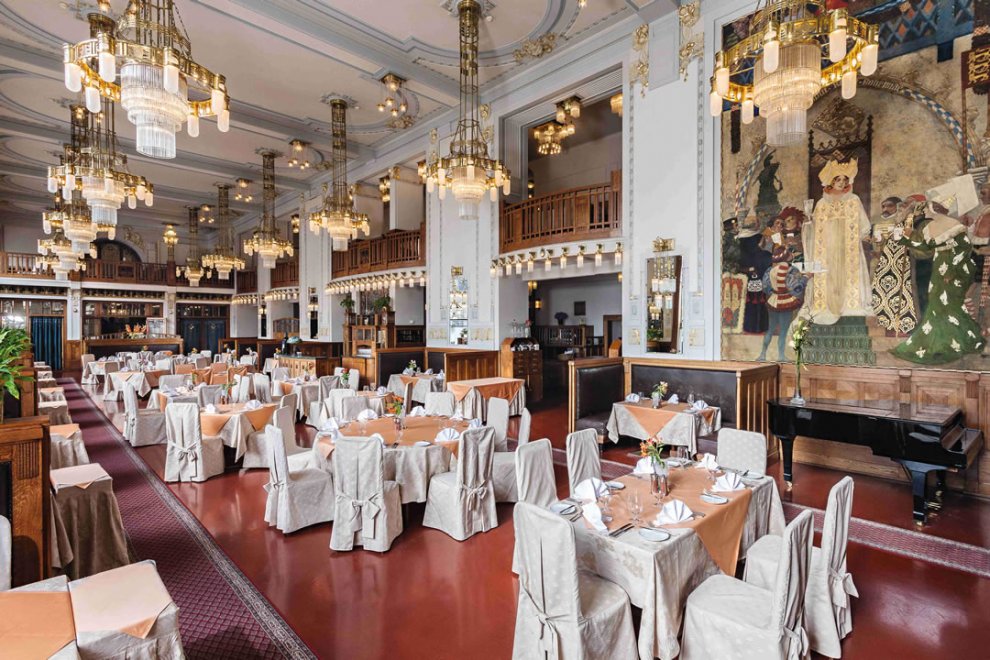
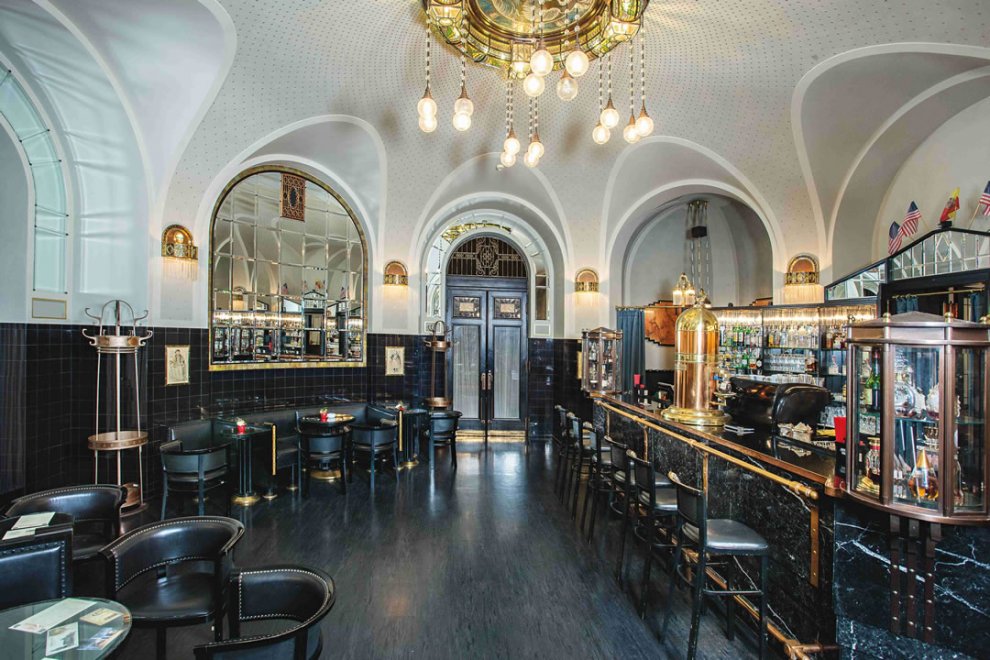
Coffee Bar meeting / Restaurant meeting / Beer Cellar meeting
More information about the Municipal House
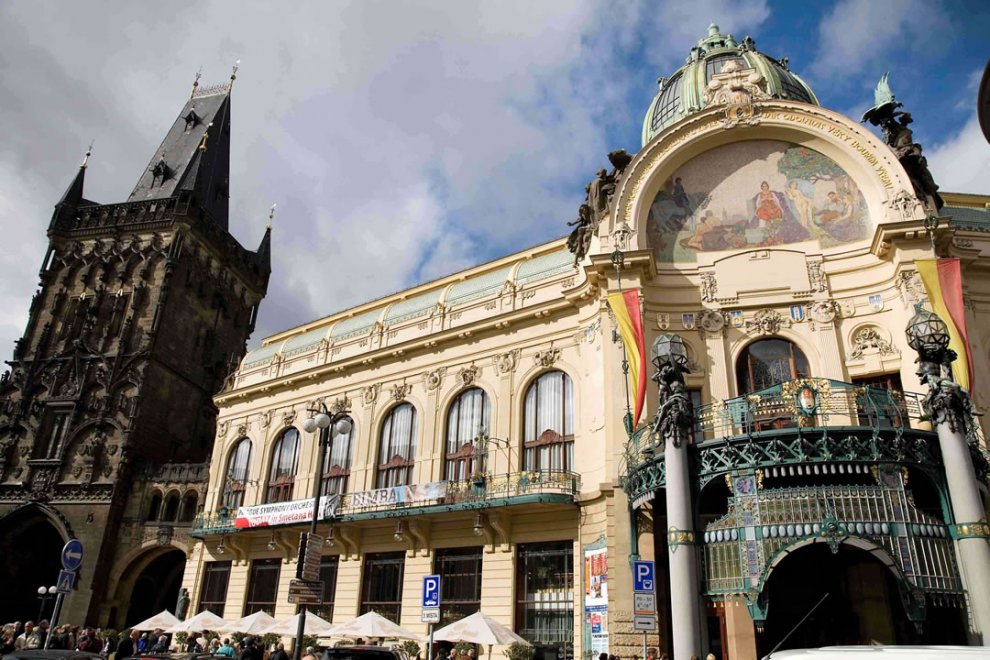
This is a historically significant place, where not only the Municipal House stands, but also The Powder Tower which is connected with it. The Tower stands here from time immemorial. It was called at one time ‚Mountain Tower‘ because it was here that carriages came into town from Kutna Hora where, in medieval times, silver was mined and currency was minted. In 1380, there was a link dedicated to one of the most significant european rules Charles IV, by his son Wenceslas IV, through the building a new residence for Czech Kings – Kings‘ Courtyard, in the area of The Powder Tower.
This Courtyard was the seat of the Czech Kings in the years 1383–1484. However a connection with Prague Castle and especially the Cathedral of St Vita was necessary and continued through the ages. This is why the connection between the Powder Tower, Old Town Square, Charles Bridge and Prague Castle is called the ‚Royal Way‘.
After Vladislav Jagellon moved the seat of the Czech kings back to Prague Castle, the place where now the Municipal House stands lost their significance to such an extent that many buildings deteriorated to such an extent that they were demolished in 1902-1903. At the end of the 19th Century, Prague continued to develop and become the new centre of legal, commerical and industrial in Central Bohemia.
There was also a need to create multifuncitonal buildings which were to be representative of the city and where all activities of Prague public life could take place. Over 14,000sqm next to the Powder Tower were demolished and zoned for these buildings.
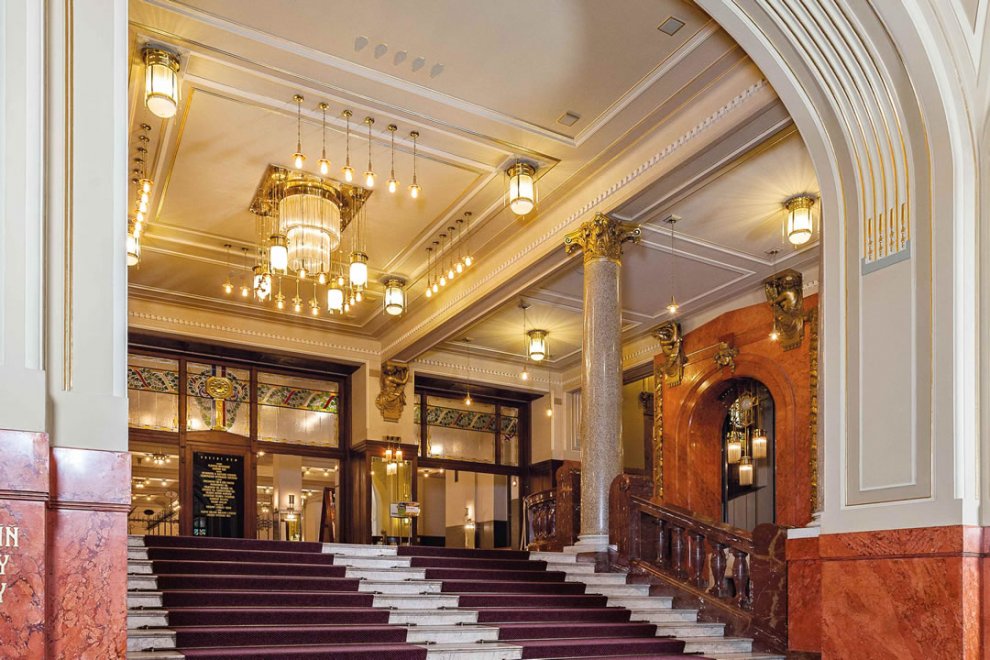
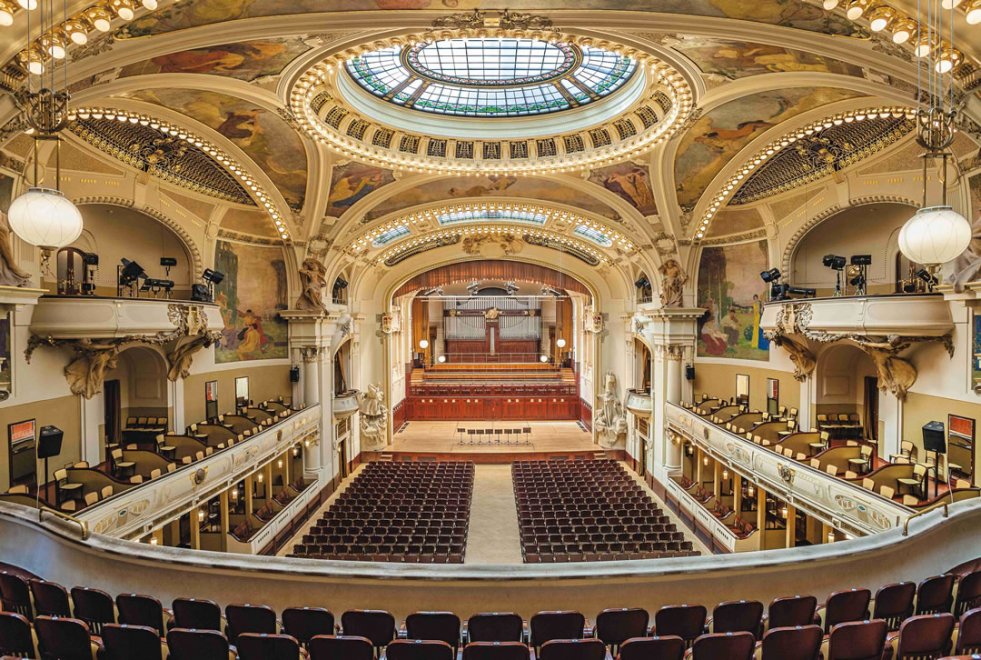
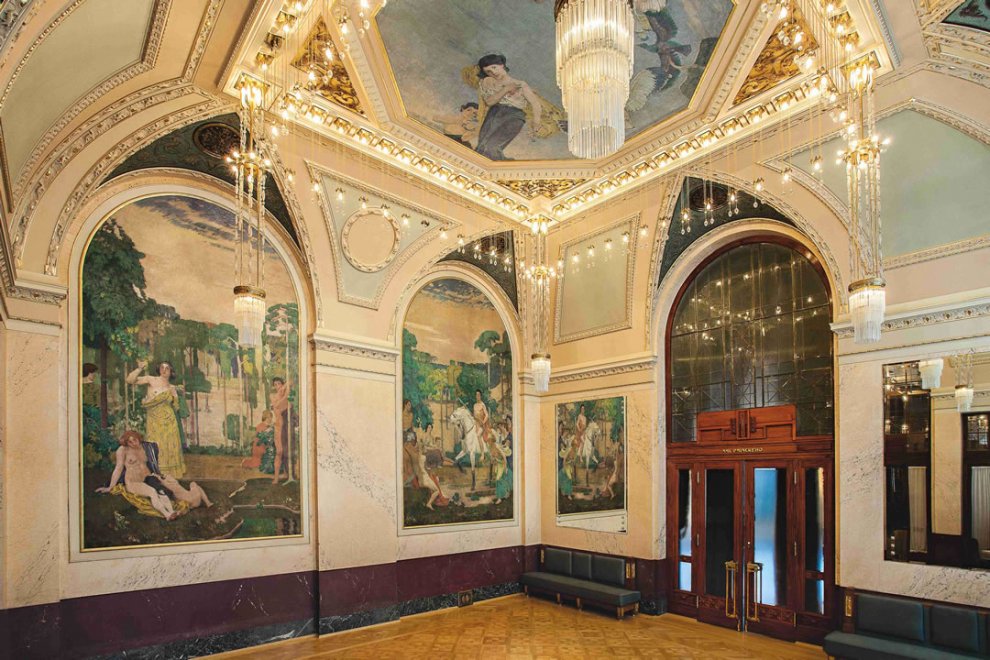
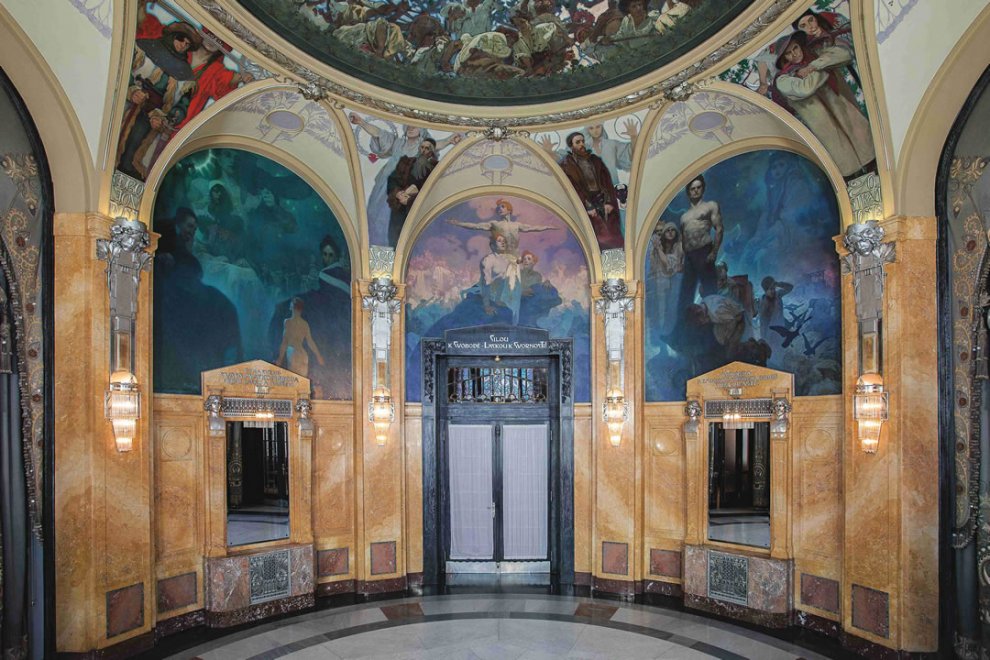
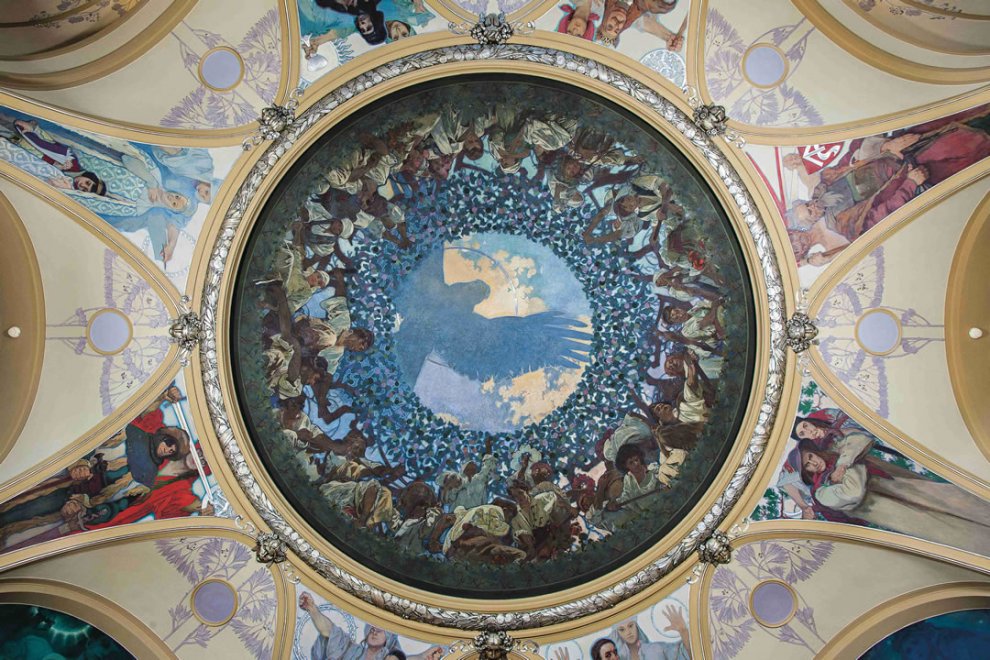
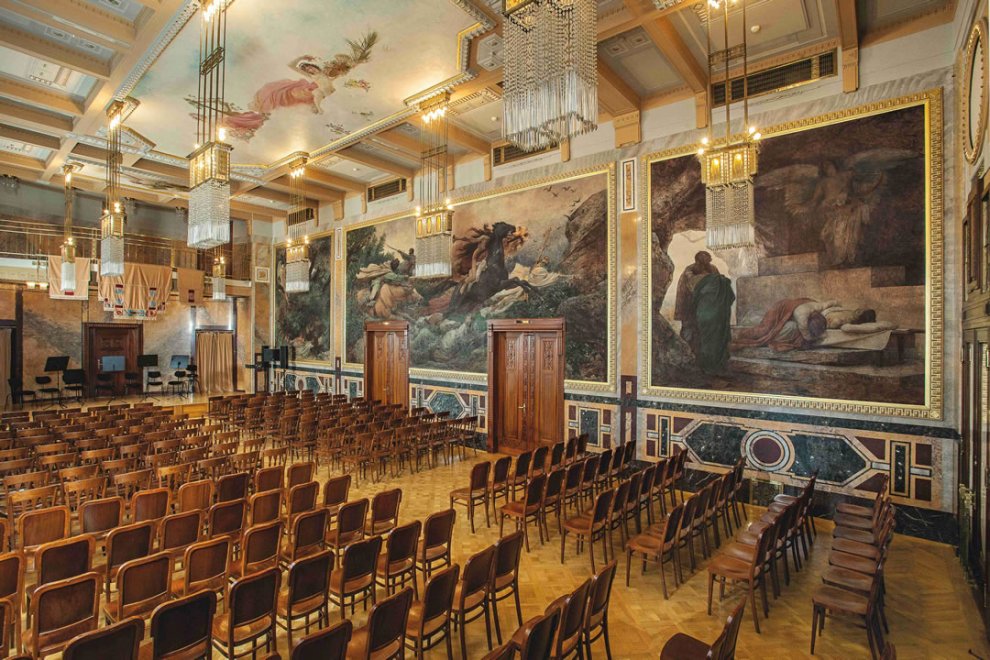
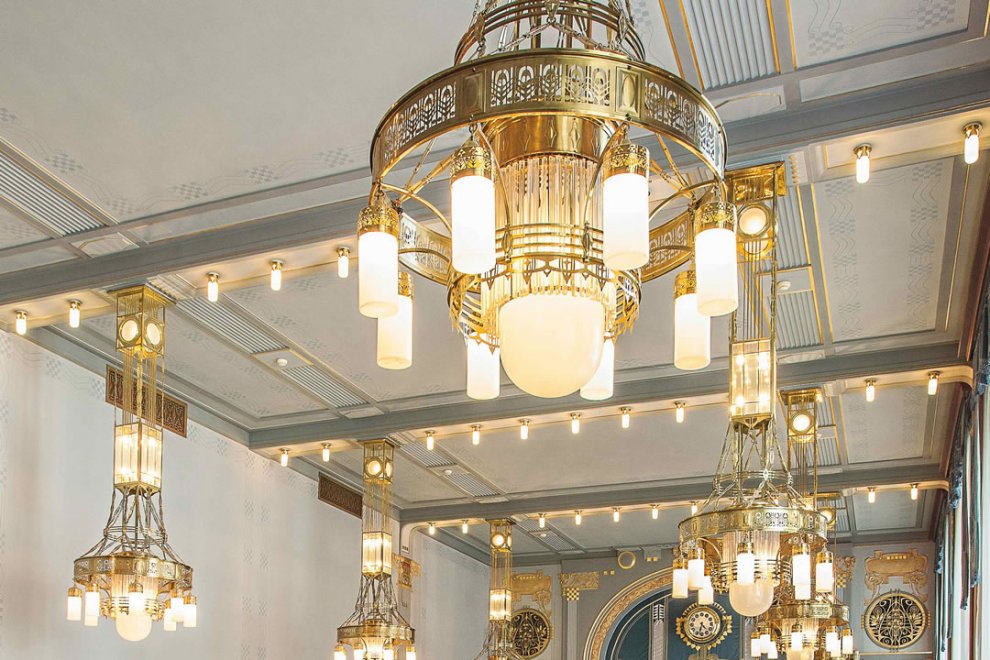
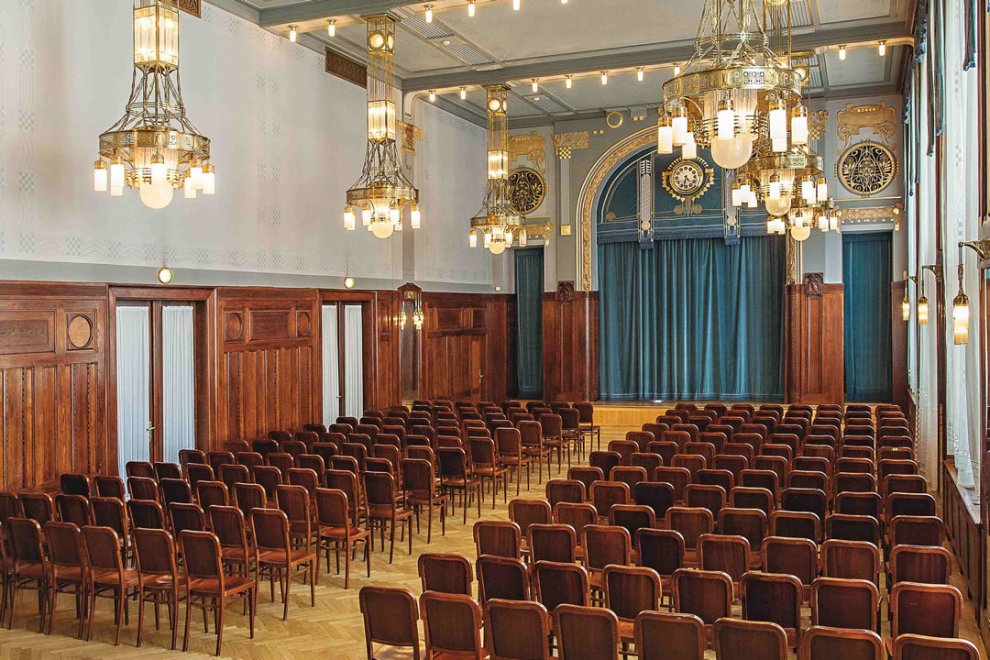
The Municipal House was built according to plans by architects Antonín Balšánek and Osvald Polívka during the years 1905 – 1912, and its significant Art Nouveau style both externally and internally has been restored and survives in its original form. Many leading Czech painters and sculptors of the early 20th Century helped to decorate this building: Mikoláš Aleš, Max Švabinský, František Ženíšek, Ladislav Šaloun, Karel Novák, Josef Mařatka, Josef Václav Myslbek, Alfons Mucha and Jan Preisler. Most dominant externally is the semicircular mosaic created according to the painting by Karel Špillar. Very important to mention is that all iron work (chandeliers, bannisters, other decorative items, door jambs etc) were created in the blacksmith works of Franta Anýž, later a member of Rotary Club Praha. The Smetana Hall, the largest in the Municipal House, have a capacity for 1200 guests. Other halls are of various sizes and in total 1240 guests can be accommodated. Renovation took place in years 1994-1997.
The Municipal House was a key venue twice in the history of Czechoslovak statehood.: 28th October, 1918, when independent Czechoslovakia was created, and then in November 1989 when the first meeting of the then communist government met with representatives of the Civic Democratic Forum led by Václav Havel.
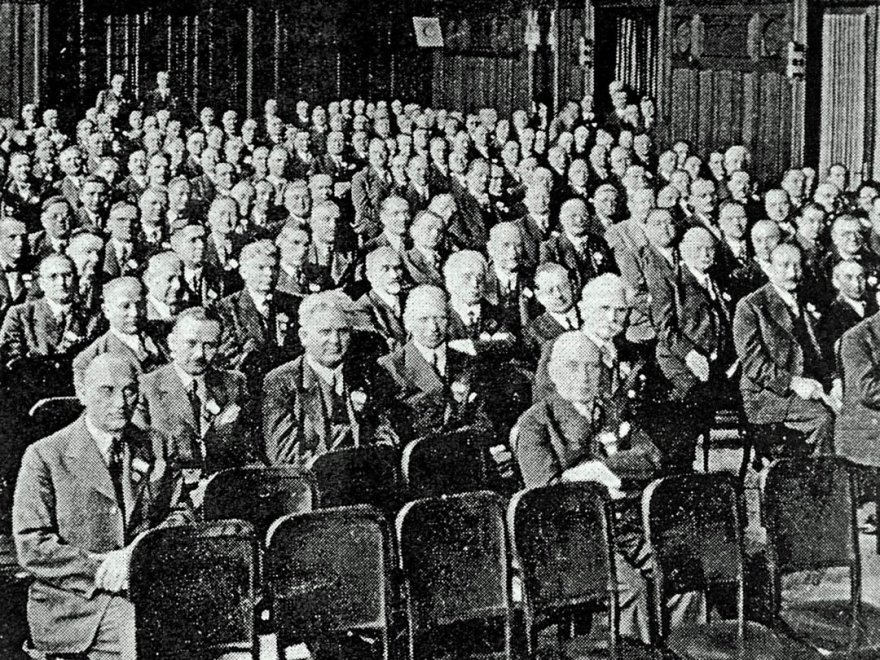
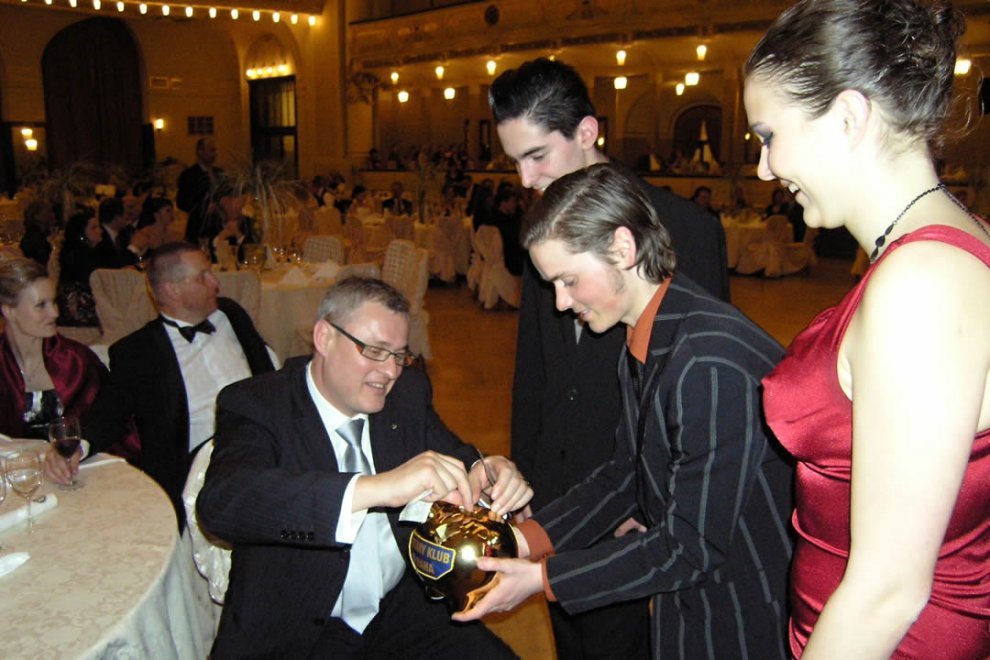
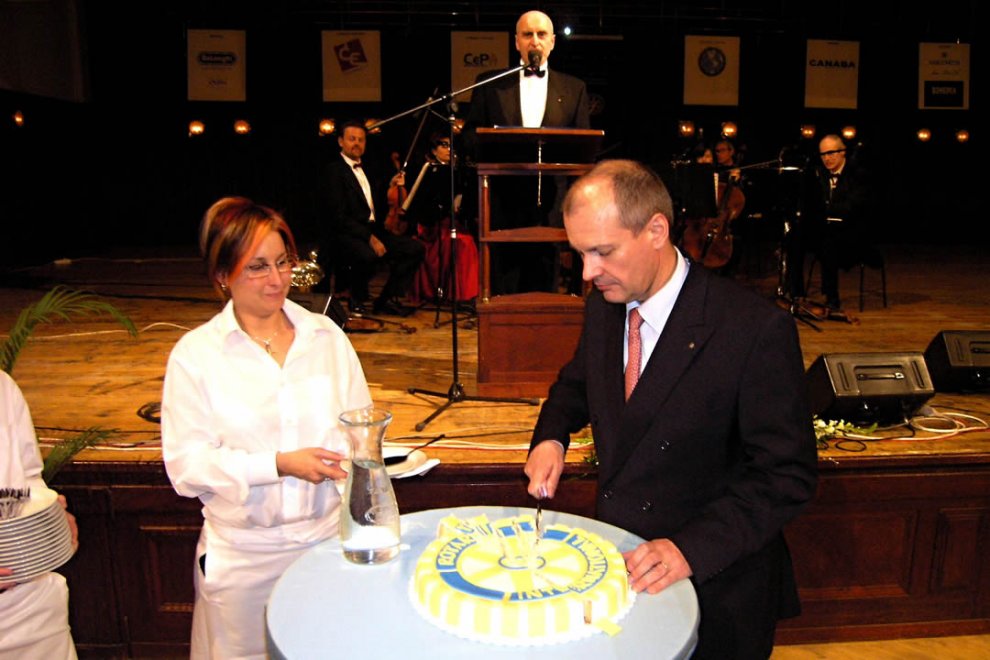
Rotary is also very closely connected to the Prague Municipal House , especially in the Czechoslovak First Republic. It was here in this building in 1925, that the first Rotary Club in Czechoslovakia (RC Praha) was inaugurated and where in 1927, the Rotary District 66 was declared established. On 27th and 28th April 1929, the 2nd Conference of the Czechoslovak District (and in April 1937, the 10th Anniversary Conference) was held here. From 1931, Sladkovsky Hall in the Municipal House, was the regulary Monday meeting place of Prague Rotarians. At this time, the club had about 100 members. This is why at this time, the club established here its office.
In the early 1930’s the number of Rotary Clubs in Czechoslovakia grew quickly (in 1936 there were already 28 clubs from Karlovy Vary to Užhorod). This meant that the Governor’s role including representing the District internationally also grew. So the RC Praha office began to also fulfill the duties of a District office. Meetings continued in the Municipal House until 1939 when Rotary Clubs and their activities in the Protectorate of Bohemia and Moravia were prohibited.
In the short period of time after the war until 1948, Prague Rotary Clubs met in Cafe Slavia, opposite the National Theatre. The French restaurtant in the Municipal House however became a refuge for Prague Rotarians after the communist pusch and the next prohibition of their activities. The few who managed to stay loyal to Rotary, continued to meet, although unofficially, at a particular table in the French Restaurant of the Municipal House, at the beginning of the 1970’s. A witness to this is the memoires of a regular attendee, President Václav Havel’s father, as well as the notes of the secret police at the time who monitored these meetings very carefully.
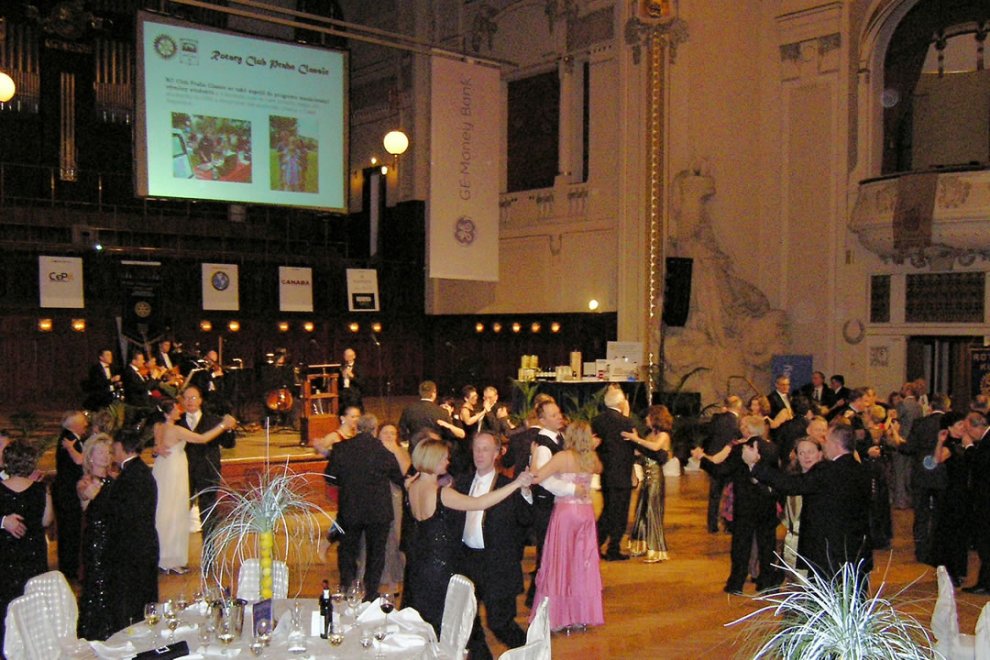
Let’s remind ourselves that in the recent history of the Municipal House, it was also a witness to our Rotary activities. In 2009, 4 of the Prague clubs led by RC Praha, held here an International Conference: Euro in the new member countries of the EU‘.
Municipal House is one of the Prague Heritage Monuments listed in the UNESCO cultural and natural heritage sites.